
£12,000 loan over 5 years: monthly repayments, total cost and how to get a lower rate
A £12,000 loan over 5 years costs about £236 to £241 a month at 6.9% to 7.9% APR, so you'd repay roughly £14,150 to £14,470 in total. This guide also compares £6,000 and £30,000 and explains what affects the rate you're offered.
A £12,000 loan over 5 years (60 months) costs about £235.87 a month at 6.9% APR, so you'd repay around £14,152 in total. At 7.5% APR it's about £239.05 a month (£14,343 in total), and at 7.9% APR about £241.18 a month (£14,472 in total). Between the lowest and highest of these rates, the difference over the full term is roughly £320.
The rest of this guide sets out the same figures for £6,000 and £30,000, explains why the rate you're offered can differ from the advertised one, and lists what to check before you apply.
What does a £12,000 loan over 5 years cost each month?
The figures below use the representative APRs from three UK lenders in our comparison: Zopa (6.9%), Tesco Bank (7.5%) and Barclays (7.9%). They assume a fixed rate, equal monthly repayments over 60 months and no fees. They are worked examples, not quotes. Your own rate depends on your circumstances and the lender's checks.
- Zopa Personal Loan, 6.9% APR: about £235.87 a month, £14,152 total repayable, roughly £2,152 interest
- Tesco Bank Personal Loan, 7.5% APR: about £239.05 a month, £14,343 total repayable, roughly £2,343 interest
- Barclays Personal Loan, 7.9% APR: about £241.18 a month, £14,472 total repayable, roughly £2,472 interest
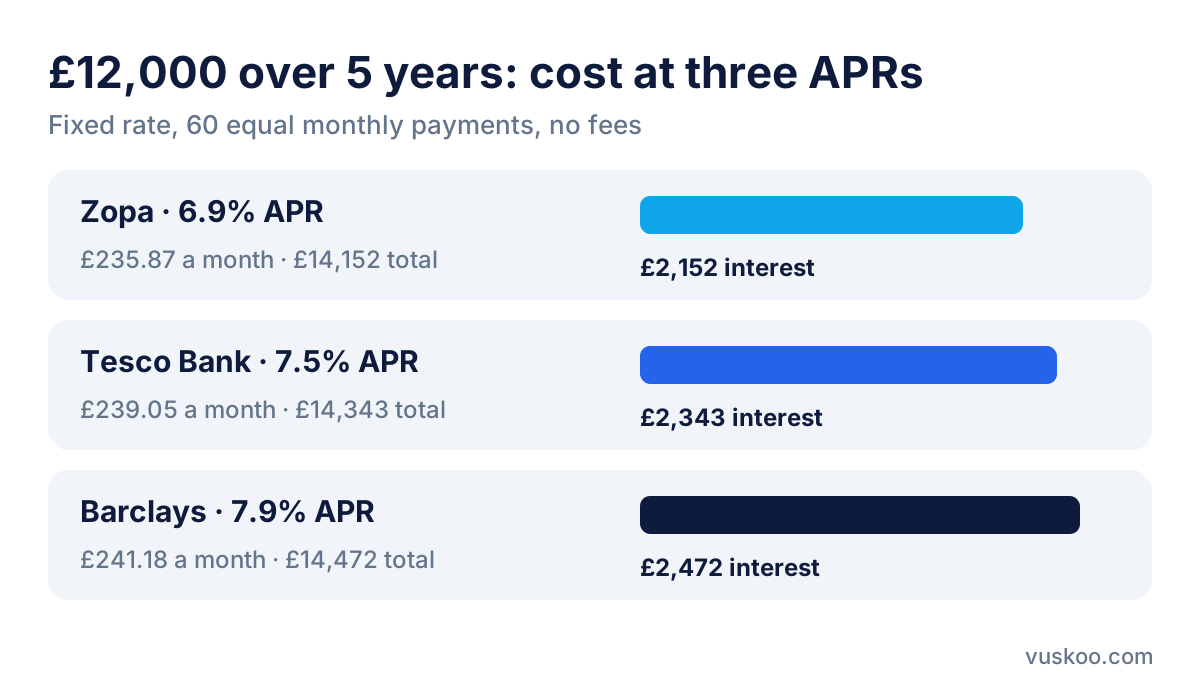
On this loan size, one percentage point of APR changes the monthly payment by only about £5. Over 60 months, though, that adds up to more than £300, so small rate differences still matter.
How do £6,000 and £30,000 compare over 60 months?
The same three APRs give these approximate costs for other loan amounts over five years.
£6,000 over 5 years
- 6.9% APR: about £117.93 a month, around £7,076 total repayable
- 7.5% APR: about £119.53 a month, around £7,172 total repayable
- 7.9% APR: about £120.59 a month, around £7,235 total repayable
£30,000 over 5 years
- 6.9% APR: about £589.67 a month, around £35,380 total repayable
- 7.5% APR: about £597.63 a month, around £35,858 total repayable
- 7.9% APR: about £602.95 a month, around £36,177 total repayable
On £30,000, the gap between 6.9% and 7.9% APR is close to £800 over the term. The bigger the loan, the more the rate matters in pounds. In practice, lenders often price loan amounts in bands, so the APR offered on £6,000 or £30,000 may not match the one advertised for £12,000.
How does the loan term change the total cost?
A longer term lowers the monthly payment but means you pay interest for longer. For example, at 6.9% APR:
- £12,000 over 3 years: about £368.83 a month, around £13,278 total repayable (roughly £1,278 interest)
- £12,000 over 5 years: about £235.87 a month, around £14,152 total repayable (roughly £2,152 interest)
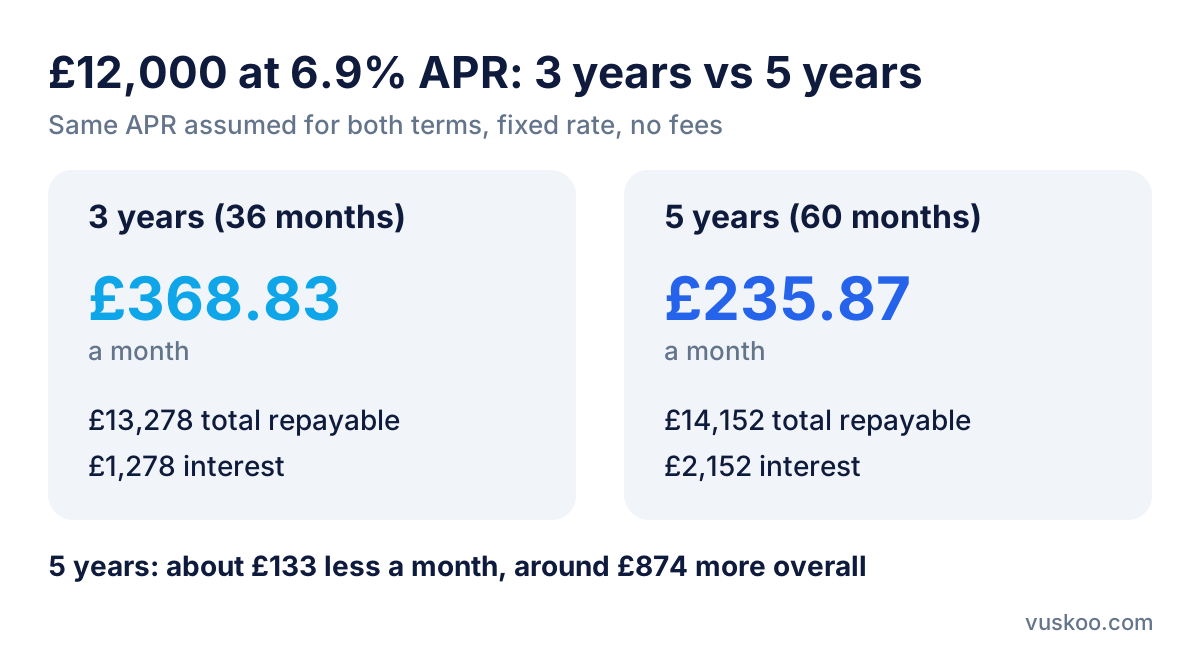
The five-year option costs about £133 less a month but around £874 more overall. This example assumes the same APR for both terms. Lenders don't always do this, and some charge a different rate depending on the term you choose.
A reasonable approach is to pick the shortest term whose monthly payment you can comfortably afford, with some room left for unexpected bills.
Why might you not get the advertised rate?
The rates in loan adverts are representative APRs. Under Financial Conduct Authority (FCA) rules, a lender only has to expect that at least 51% of successful applicants will get that rate or lower. Everyone else can be offered a higher rate, and some applicants will be declined. The FCA consulted on this threshold in 2026; at the time of writing, the 51% standard still applies.
The rate you're actually offered usually depends on:
- Your credit history: missed payments, defaults or CCJs on your file usually mean a higher rate or a decline
- How much credit you already use: credit card balances and other loans that are high compared with your limits can count against you
- Income and outgoings: lenders check whether the repayments are affordable alongside your existing commitments
- Loan amount and term: rates are often set in bands, so borrowing slightly more or less can change your APR
- Stability: how long you've been at your address and in your job, and whether you're on the electoral roll
How eligibility checks work
Many lenders and comparison tools offer an eligibility check or personalised quote that uses a soft search. A soft search can't be seen by other lenders and doesn't affect your credit score. It shows how likely you are to be accepted, and often the rate you'd get.
A full application leads to a hard search, which does show on your credit file. Several hard searches close together can make lenders more cautious, so use soft-search tools to narrow down your options before making a full application.
What to check before applying for a £12,000 loan
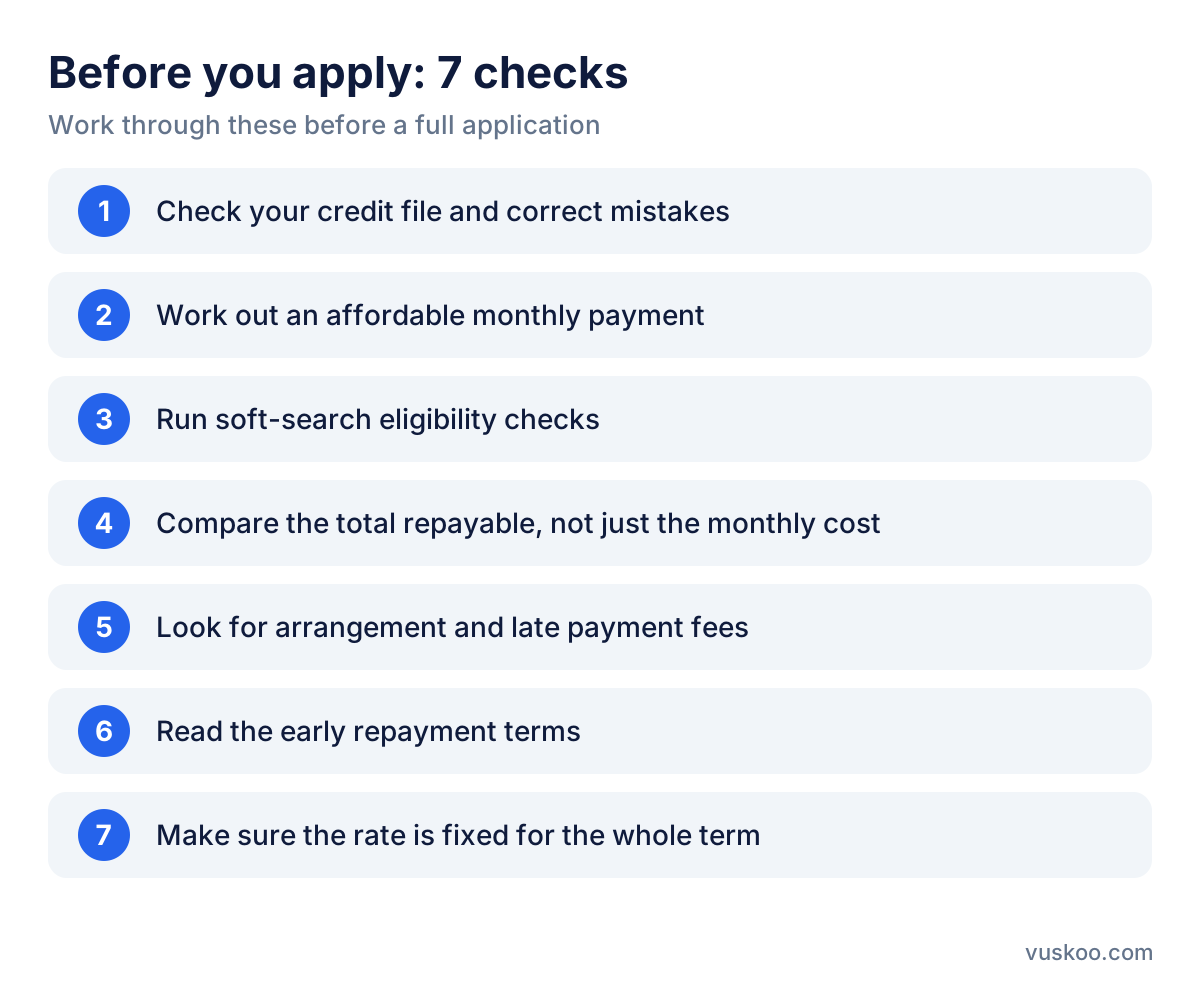
- Check your credit file with a credit reference agency and correct any mistakes.
- Work out an affordable monthly payment from your actual budget, not from the most a lender says it will approve.
- Run eligibility checks with several lenders to see your personal rate, not just the representative one.
- Compare the total repayable, not only the monthly payment, especially if you're comparing different terms.
- Look for fees, such as arrangement fees or charges for late payments.
- Read the early repayment terms, in case you want to clear the loan sooner.
- Make sure the rate is fixed, so your payment won't change during the term.
Can you repay early or change your mind?
For most regulated personal loans, the Consumer Credit Act 1974 gives you 14 days to withdraw after the agreement is made (or after you receive your copy, if that's later). You don't need to give a reason. You do have to repay the money you've borrowed, plus interest for the days you had it, within 30 days of telling the lender.
You can also repay a regulated loan early. If more than 12 months of the term are left, the lender can charge up to 58 days' interest. If 12 months or fewer are left, the limit is 28 days' interest. This is often much less than the interest you save by clearing the loan early, but ask the lender for a settlement figure first.
Frequently asked questions
How much is a £12,000 loan over 5 years per month?
At the representative APRs in our comparison, it costs about £235.87 a month at 6.9%, £239.05 at 7.5% and £241.18 at 7.9%. Your own payment depends on the rate you're offered.
How much interest will I pay on £12,000 over 60 months?
Roughly £2,152 at 6.9% APR, £2,343 at 7.5% APR and £2,472 at 7.9% APR, assuming a fixed rate and no fees.
Is it better to borrow over 3 years or 5 years?
A three-year term costs less in total but has higher monthly payments. A five-year term is easier on your monthly budget, but you pay more interest. Pick the shortest term you can comfortably afford.
Will checking my eligibility affect my credit score?
Eligibility checks that use a soft search don't affect your score and can't be seen by other lenders. A full application uses a hard search, which does appear on your file.
Which lenders offer a £12,000 personal loan?
Our comparison includes Zopa (6.9% representative APR), Tesco Bank (7.5% representative APR) and Barclays (7.9% representative APR). Check each lender's current terms and your personal rate before you apply.
← Back to blog
Subscribe to our newsletter
The best deals and money-saving tips, straight to your inbox. No spam.