A cash ISA calculator comes down to one sum: deposit × interest rate (AER) = interest earned in a year, and in a cash ISA all of it is tax-free. At an illustrative rate of 4% AER, £1,000 earns £40 a year, £10,000 earns £400 and £20,000 earns £800, with no tax to pay however much you earn. Whether that beats an ordinary savings account depends on your Personal Savings Allowance, your tax band and the changes coming on 6 April 2027.
This guide goes through worked examples, shows when a cash ISA makes a real difference and explains how much you may want to pay in before 5 April 2027.
How does a cash ISA calculator work?
You can work out cash ISA interest yourself without a dedicated tool. You need three numbers:
- The amount you deposit, for example £5,000.
- The AER (annual equivalent rate), which already takes into account how often interest is paid and compounded.
- The term, meaning how long the money stays in the account.
For one year, multiply the deposit by the AER. For more than one year, add each year's interest to the balance before working out the next year. That is compounding, and it only applies if you leave the interest in the account.
The examples below use a 4% AER purely to show how the sums work. It is not a quote for any particular account. Rates change often, so put in the rate you are actually being offered.
Worked examples: what £1,000 to £20,000 earns tax-free
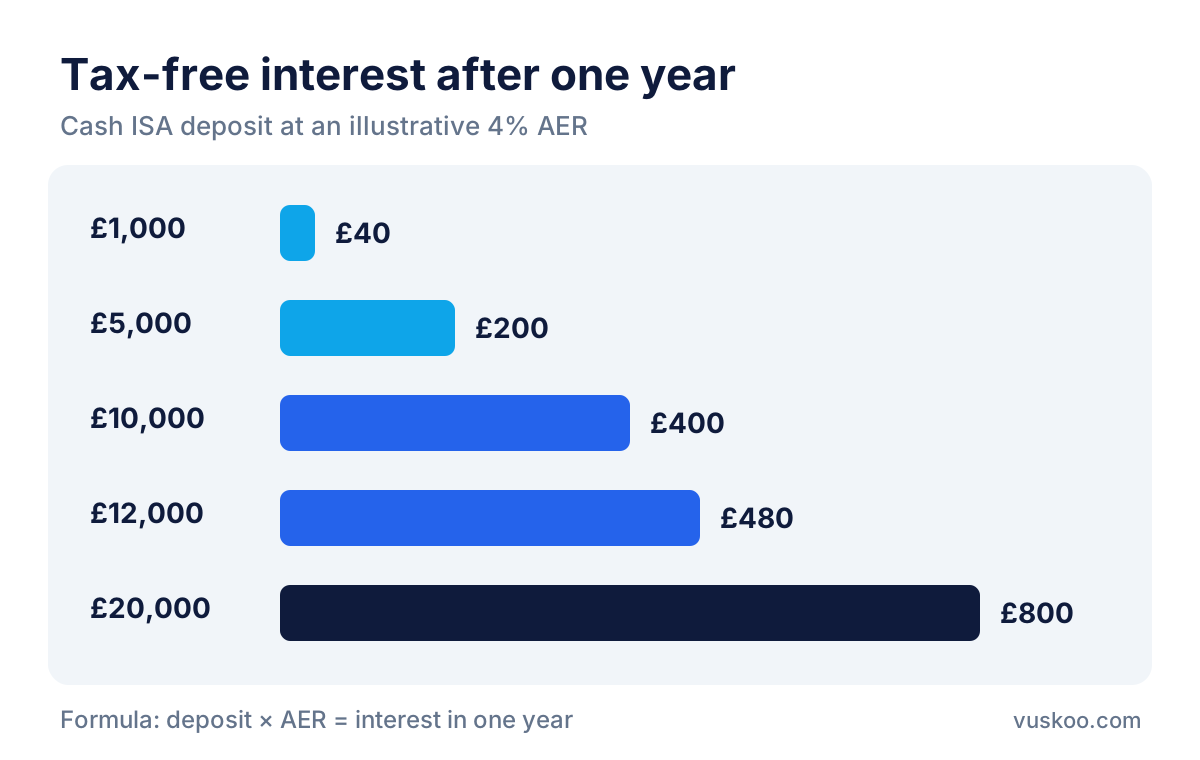
- £1,000 at 4% AER: £40 interest after one year.
- £5,000 at 4% AER: £200 after one year.
- £10,000 at 4% AER: £400 after one year.
- £12,000 at 4% AER: £480 after one year.
- £20,000 at 4% AER: £800 after one year.
To adjust for another rate, scale the figure in proportion. At 3% AER, for instance, each result is three quarters of the amount above, so £20,000 would earn £600.
A two-year example with compounding
Say you put £12,000 into a two-year fixed cash ISA at 4% AER and leave the interest in. Year one earns £480, taking the balance to £12,480. Year two earns 4% of £12,480, which is £499.20. Total interest over two years is £979.20, all tax-free.
Do you need a cash ISA if you have the Personal Savings Allowance?
Most people can earn some savings interest tax-free outside an ISA thanks to the Personal Savings Allowance (PSA):
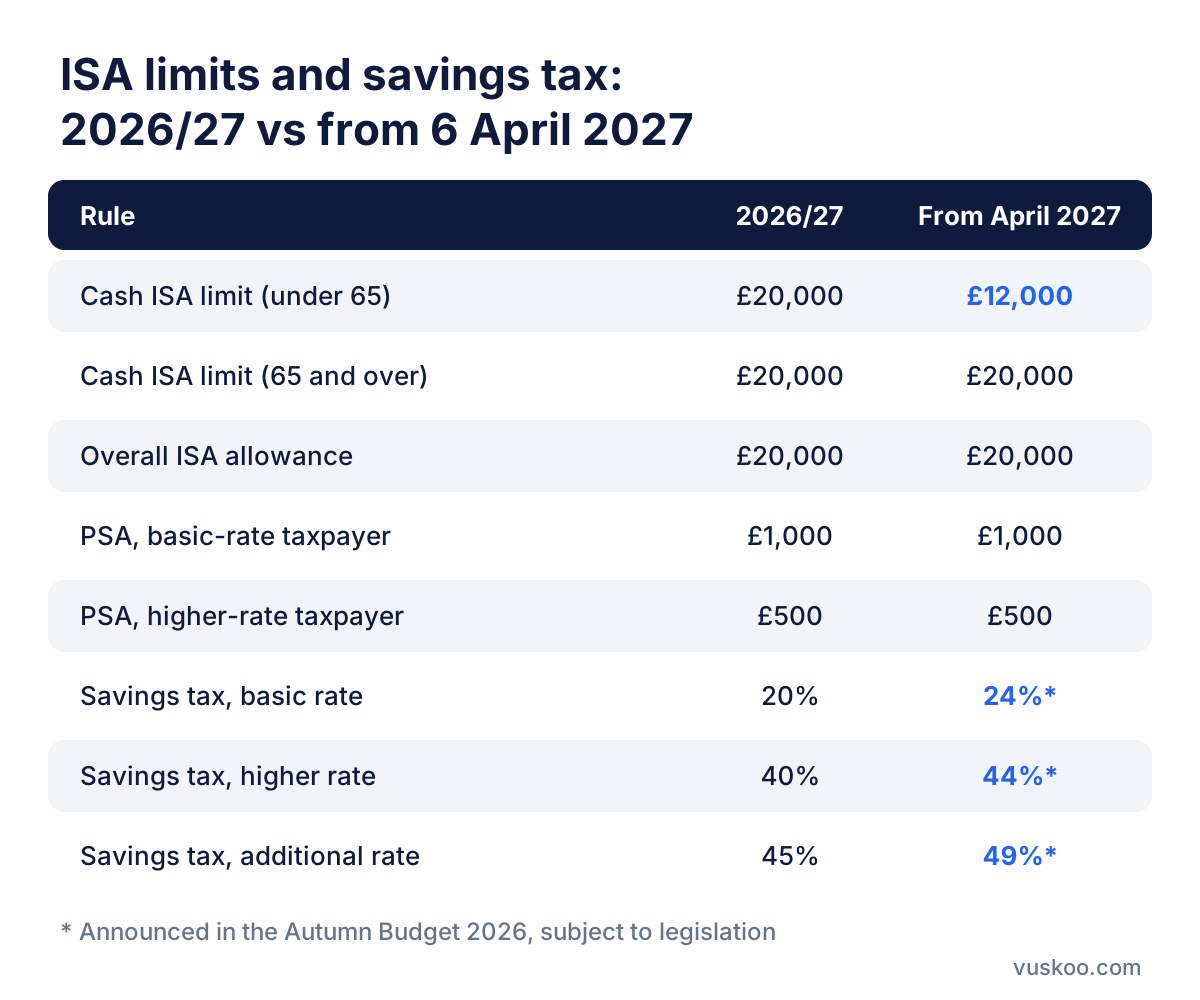
- Basic-rate taxpayers: £1,000 of interest a year.
- Higher-rate taxpayers: £500 a year.
- Additional-rate taxpayers: no allowance.
All interest counts towards the PSA, including interest on current accounts and easy-access savings pots. Interest earned inside an ISA does not count.
Using the same 4% AER, a basic-rate taxpayer could hold about £25,000 in ordinary savings before the interest goes over £1,000. For a higher-rate taxpayer, the £500 allowance runs out at about £12,500. Above those amounts, interest outside an ISA is taxed at your savings rate.
Example: how much tax would you pay outside an ISA?
Take £30,000 in an ordinary savings account at 4% AER, earning £1,200 a year:
- Basic-rate taxpayer: £200 above the £1,000 PSA, taxed at 20%, comes to £40 a year in the 2026/27 tax year.
- Higher-rate taxpayer: £700 above the £500 PSA, taxed at 40%, comes to £280 a year.
In a cash ISA the tax on that interest would be nil. The more you save, the higher your tax band and the higher interest rates are, the more the ISA wrapper is worth.
What changes in April 2027?
Two announced changes from 6 April 2027 affect this choice.
A £12,000 cash ISA limit for under-65s
The overall ISA allowance stays at £20,000 a year. However, the government plans to limit how much of it savers under 65 can put into cash ISAs to £12,000. The rest can still go into other ISA types, such as stocks and shares ISAs. Savers who turn 65 in or before the tax year keep a £20,000 cash ISA limit, because entitlement runs from the start of the tax year in which you turn 65.
The government has also set out rules to stop people getting around the cap by moving money from stocks and shares ISAs into cash ISAs. The regulations were consulted on in draft form, so check the final rules once they are in force.
Higher tax on savings interest outside ISAs
Budget 2025 confirmed a two percentage point rise in income tax on savings from April 2027. The Autumn Budget 2026 then announced a further two-point rise. If it becomes law, savings interest above your PSA would be taxed at 24% (basic rate), 44% (higher rate) and 49% (additional rate). The PSA itself is not changing.
In the £30,000 example above, the basic-rate taxpayer's bill would go from £40 to £48 a year, and the higher-rate taxpayer's from £280 to £308. Those increases make tax-free interest worth a little more.
How much should you pay in before 5 April 2027?
The 2026/27 tax year runs until 5 April 2027. Until then, under-65s can still put up to the full £20,000 into cash ISAs. Unused allowance does not carry over to the next tax year.
- Check what you have already paid in since 6 April 2026, across all your ISAs.
- Work out how much savings interest you earn outside ISAs and compare it with your PSA.
- Keep an emergency fund you can reach. A flexible or easy-access cash ISA can do that job.
- Consider topping up to £20,000 before 5 April 2027 if you have cash that would otherwise go over your PSA. Money already inside a cash ISA keeps its tax-free status in later years.
- Move existing ISAs by transfer, not withdrawal. Taking money out and paying it back in uses up new allowance unless the ISA is flexible.
Fixed-rate or easy-access cash ISA?
- Easy-access cash ISA: you can withdraw at any time. The rate is variable and can fall. Some are "flexible", which means you can replace money you take out in the same tax year without using more allowance.
- Fixed-rate cash ISA: the rate is locked for a set term, often one to five years. Early access usually costs a penalty, often a number of days' interest.
- Notice cash ISA: you give a set period of notice before withdrawing, in return for a rate that may sit between the two.
A fixed rate makes the calculator result predictable. With easy access you keep flexibility but cannot count on the rate staying the same.
Where current accounts fit in
Many savers keep day-to-day money in a free current account and hold savings separately. In our comparison, the Chase UK Current Account, Starling Personal Current Account, Monzo Current Account and Nationwide FlexDirect all cost £0 a month. Monzo also offers paid plans: Extra at £3, Perks at £9 and Max at £19 a month. Any interest on current accounts or linked savings pots outside an ISA counts towards your PSA, so include it when you run your numbers.
FAQ
How do I calculate cash ISA interest?
Multiply the amount you deposit by the AER to get one year's interest. For longer terms, add each year's interest to the balance before working out the next year.
Is cash ISA interest taxed?
No. Interest in a cash ISA is tax-free and does not count towards your Personal Savings Allowance.
Can I still put £20,000 into a cash ISA?
Yes, in the 2026/27 tax year, which ends on 5 April 2027. From 6 April 2027 the planned cash ISA limit for under-65s is £12,000. Savers aged 65 or over keep £20,000.
Will money already in my cash ISA be affected by the new limit?
The £12,000 cap applies to new payments each tax year. Money already held in a cash ISA keeps its tax-free status.
Is a cash ISA worth it for a basic-rate taxpayer with small savings?
If your total interest stays under £1,000 a year, you would pay no tax on it outside an ISA anyway. A cash ISA can still help if your savings, interest rates or tax rates go up later.
Photo: wilkernet / Pixabay