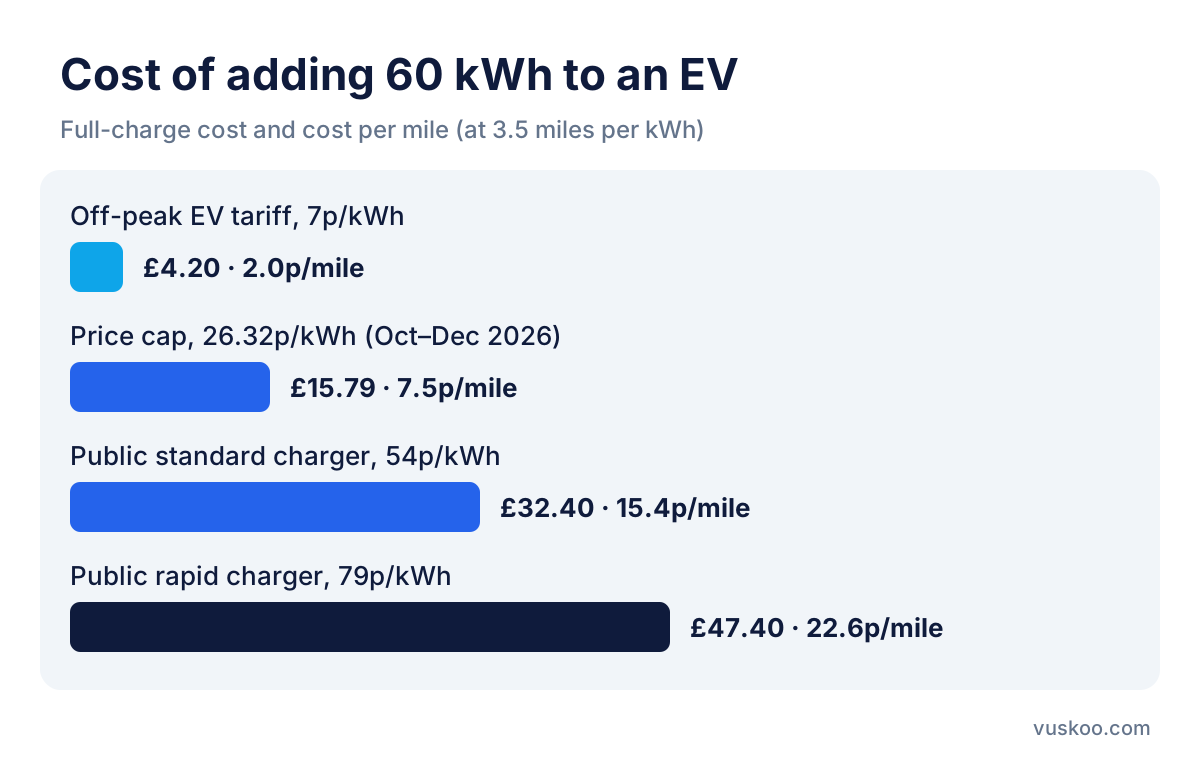
How much it costs to charge an electric car at home in the UK depends mainly on your electricity unit rate. Under the standard price cap rate of 26.32p/kWh (1 October to 31 December 2026), filling a typical 60 kWh battery from empty costs about £15.79, which works out at roughly 7.5p per mile. On an off-peak EV tariff at around 7p/kWh, the same charge costs about £4.20, or about 2p per mile. At a public rapid charger costing around 79p/kWh, the same amount of energy would cost about £47.40.
The rest of this guide shows how we worked out those figures and how they change with your car and mileage. It also covers what to check before you switch to an EV electricity tariff.
How to work out the cost of a full charge
You need two simple sums:
- Cost of a charge = energy added to the battery (kWh) × unit rate (p/kWh)
- Cost per mile = unit rate (p/kWh) ÷ miles your car covers per kWh
The examples in this article assume a 60 kWh battery charged from empty to full and an efficiency of 3.5 miles per kWh. These are illustrative assumptions rather than figures for a particular car. Small cars often cover more miles per kWh, and large SUVs cover fewer. Some energy is also lost as heat while the car charges, so the real cost is usually a little higher than the battery size alone suggests.
Cost to charge an electric car at home in the UK on the price cap
If you are on a standard variable tariff, your unit rate is limited by Ofgem's energy price cap. From 1 October to 31 December 2026, the average capped electricity rate for Direct Debit customers is 26.32p/kWh, with an average standing charge of 54.83p per day. Rates vary by region, so check the figures on your own bill.
At 26.32p/kWh:
- A full 60 kWh charge costs about £15.79
- The cost per mile is about 7.5p
- Driving 7,000 miles a year uses about 2,000 kWh, which costs roughly £526
The standing charge doesn't change with how much you charge, because you pay it anyway. So in this sum it only matters if you are comparing tariffs with different standing charges.
How much cheaper is an off-peak EV tariff?
EV tariffs give you a much lower unit rate during set overnight hours, typically a window of four to six hours. Published off-peak rates in late 2026 are roughly 7p to 9p/kWh, depending on the supplier and tariff. Using 7p/kWh as an example:
- A full 60 kWh charge costs about £4.20
- The cost per mile is about 2p
- 7,000 miles a year costs roughly £140 in electricity for the car
On those assumptions, that is around £386 a year less than charging at the price cap rate. The catch is that the rest of your electricity use, outside the off-peak window, is usually charged at a higher peak rate. Whether you save overall depends on how much of your household's use you can shift overnight.
Public rapid chargers compared with charging at home
According to Zapmap's charging price index, the average pay-as-you-go price in September 2026 was 79p/kWh at rapid and ultra-rapid chargers (50kW and above), and 54p/kWh at slower public chargers. At 79p/kWh, adding 60 kWh would cost about £47.40, or around 22.6p per mile. That is roughly three times the price cap rate and more than ten times a 7p off-peak rate.
Rapid chargers are still useful on long journeys. But if you have off-street parking and a home charger, most of your charging is likely to cost far less at home.
What to check before switching to an EV electricity tariff
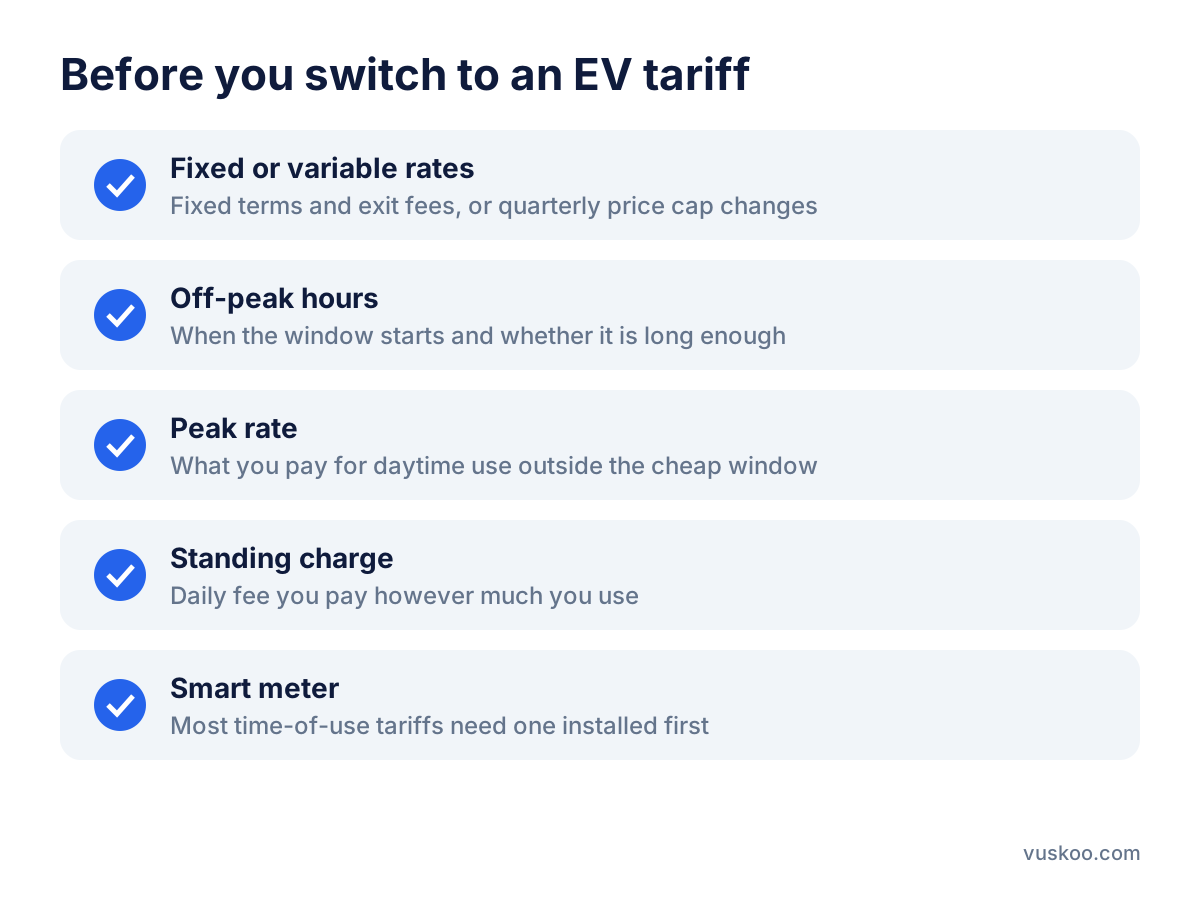
Fixed or variable rates
A fixed tariff locks your unit rates and standing charge for a set term, often 12 months. A variable tariff can change when the price cap changes, which happens every quarter. Check whether there are exit fees if you want to leave a fixed deal early.
Off-peak hours and length of the window
Look at when the cheap window starts and how long it lasts. With a 7kW home charger, a four-hour window adds roughly 28 kWh, which may not fill a large battery from empty in one night. Some tariffs also need you to own a specific car, charger or battery.
Peak rate and standing charge
A low off-peak rate can be offset by a higher daytime rate or standing charge. If you work from home or use a lot of electricity during the day, compare your total annual cost rather than just the overnight price.
Smart meter
Most EV and time-of-use tariffs need a smart meter, because the supplier has to record when you use electricity. If you don't have one yet, ask your supplier to install it before you switch.
Suppliers to compare
The tariffs we list in the UK include E.ON Next Drive — Fixed, shown at an estimated £110 a month, and general tariffs such as the Octopus Energy Flexible Tariff (£95/mo), E.ON Next Fixed 12-Month (£95/mo), So Energy Green Tariff (£90/mo), EDF Smart Tariff (£102/mo), OVO Energy 1-Year Fix (£105/mo) and British Gas Standard Variable (£120/mo). These are estimated monthly payments for a whole household, not unit rates. Your own figure will depend on your usage, your region and how much you drive.
To work out your own figures, use our EV charging cost calculator. Enter your battery size, your annual mileage and the unit rates from your current tariff and from the EV tariff you are considering.
Frequently asked questions
How much does a full charge cost at home in the UK?
For a 60 kWh battery, it costs about £15.79 at the October–December 2026 price cap rate of 26.32p/kWh, or about £4.20 at an off-peak rate of 7p/kWh. Smaller or larger batteries scale in proportion.
Is it cheaper to charge at home or at a public charger?
At home is usually cheaper. Zapmap's September 2026 average was 79p/kWh at rapid chargers and 54p/kWh at slower public chargers, against 26.32p/kWh at the price cap.
Do I need a smart meter for an EV tariff?
In most cases, yes. Time-of-use tariffs depend on recording when you use electricity, and that needs a smart meter.
Will the price cap change after December 2026?
Ofgem reviews the cap every quarter, so a new rate will apply from 1 January 2027. If you are on a variable tariff, check the new rates when they are announced.
Photo: VariousPhotography / Pixabay