
In this article
- How is a monthly mortgage payment worked out?
- Monthly mortgage payments from £100,000 to £400,000
- Does a longer term save money?
- Repayment vs interest-only: what's the difference?
- How a bigger deposit or a lower rate changes the total cost
- What to compare beyond the headline rate
- Frequently asked questions
How much is a mortgage payment? It comes down to three things: how much you borrow, the interest rate and the length of the term. On a capital repayment mortgage, each £100,000 you borrow costs about £528 a month at 4% over 25 years, about £585 at 5% and about £644 at 6%. Stretch the term to 35 years and those figures fall to roughly £443, £505 and £570, but you pay more interest overall. The tables below cover loans from £100,000 to £400,000, so you can find a figure close to your own.
All the figures are examples. They assume a capital repayment mortgage with the same rate for the whole term, which rarely happens in real life: most UK borrowers fix for two or five years and then remortgage. Use them to get a sense of scale, not as a quote.
How is a monthly mortgage payment worked out?
With a repayment mortgage, the lender sets a monthly amount that covers the interest and also pays off the loan itself (the capital) by the end of the term. In the early years most of each payment goes on interest. As the balance comes down, more of each payment goes towards the capital.
Your payment depends on:
- Loan size: the property price minus your deposit. Payments rise in line with the loan, so £200,000 costs twice as much a month as £100,000 at the same rate and term.
- Interest rate: even one percentage point makes a noticeable difference, both each month and over the life of the loan.
- Term: a longer term lowers the monthly payment but increases the total interest you pay.
- Repayment type: capital repayment or interest-only (explained below).
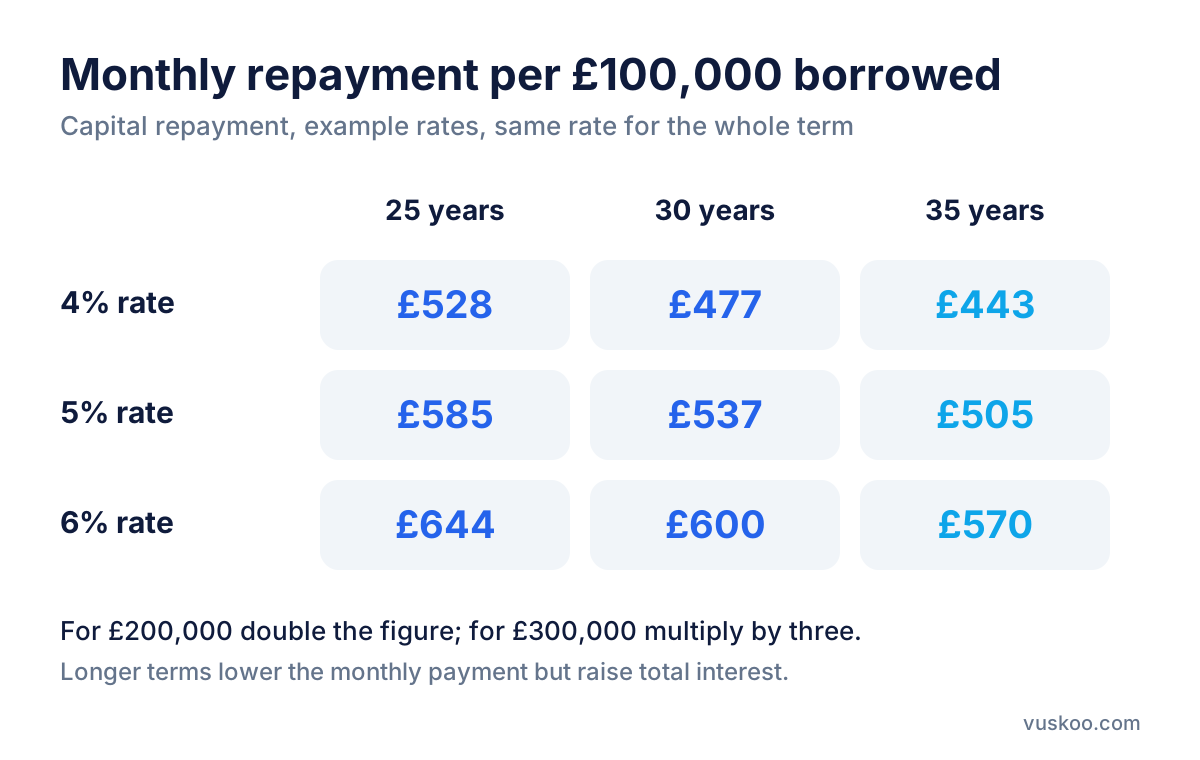
Monthly mortgage payments from £100,000 to £400,000
The figures below are monthly capital repayments, rounded to the nearest pound, for terms of 25, 30 and 35 years. Each rate assumes nothing changes for the full term.
At a 4% interest rate
- £100,000: £528 (25 years), £477 (30 years), £443 (35 years)
- £150,000: £792, £716, £664
- £200,000: £1,056, £955, £886
- £250,000: £1,320, £1,194, £1,107
- £300,000: £1,584, £1,432, £1,328
- £400,000: £2,111, £1,910, £1,771
At a 5% interest rate
- £100,000: £585 (25 years), £537 (30 years), £505 (35 years)
- £150,000: £877, £805, £757
- £200,000: £1,169, £1,074, £1,009
- £250,000: £1,461, £1,342, £1,262
- £300,000: £1,754, £1,610, £1,514
- £400,000: £2,338, £2,147, £2,019
At a 6% interest rate
- £100,000: £644 (25 years), £600 (30 years), £570 (35 years)
- £150,000: £966, £899, £855
- £200,000: £1,289, £1,199, £1,140
- £250,000: £1,611, £1,499, £1,425
- £300,000: £1,933, £1,799, £1,711
- £400,000: £2,577, £2,398, £2,281
For a loan size that isn't listed, take the £100,000 figure for your rate and term and scale it up. For example, £180,000 at 5% over 30 years is about 1.8 × £537, so roughly £966 a month.
Does a longer term save money?
A longer term lowers your monthly payment, but you pay interest for longer. On a £200,000 loan at 5%, total interest comes to about £150,800 over 25 years, about £186,500 over 30 years and about £223,900 over 35 years. Going from 25 to 35 years saves around £160 a month, but adds roughly £73,000 in interest if the rate stays the same.
Some borrowers take a longer term to pass affordability checks or keep monthly costs manageable, then overpay when they can. According to MoneyHelper, many lenders let you overpay up to 10% a year without a penalty. Above your lender's limit, an early repayment charge may apply, so check the terms of your deal first.
Repayment vs interest-only: what's the difference?
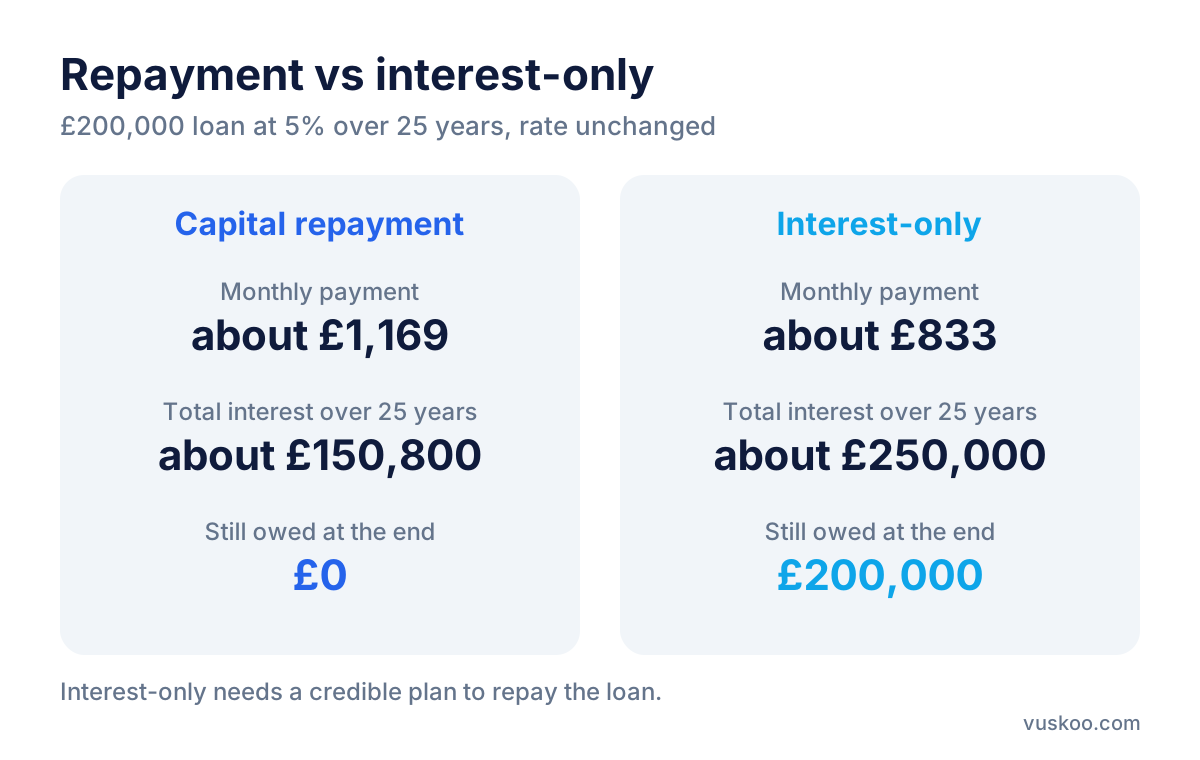
On an interest-only mortgage, you only pay the interest each month and the full loan is still owed at the end of the term. The monthly payment is simply the loan multiplied by the rate, divided by 12. For a £200,000 loan, that's about £667 a month at 4%, £833 at 5% and £1,000 at 6%.
That's lower than the capital repayment figure, but nothing has been paid off. On £200,000 at 5% over 25 years, the interest-only route costs about £250,000 in interest and still leaves the £200,000 to clear. The repayment route costs about £150,800 in interest and nothing is owed at the end.
Under FCA rules, lenders can only offer interest-only lending where the borrower has a credible plan to repay the capital, such as savings, investments or selling the property. Many lenders also offer part-and-part mortgages, where some of the loan is on repayment and the rest is interest-only.
How a bigger deposit or a lower rate changes the total cost
A bigger deposit
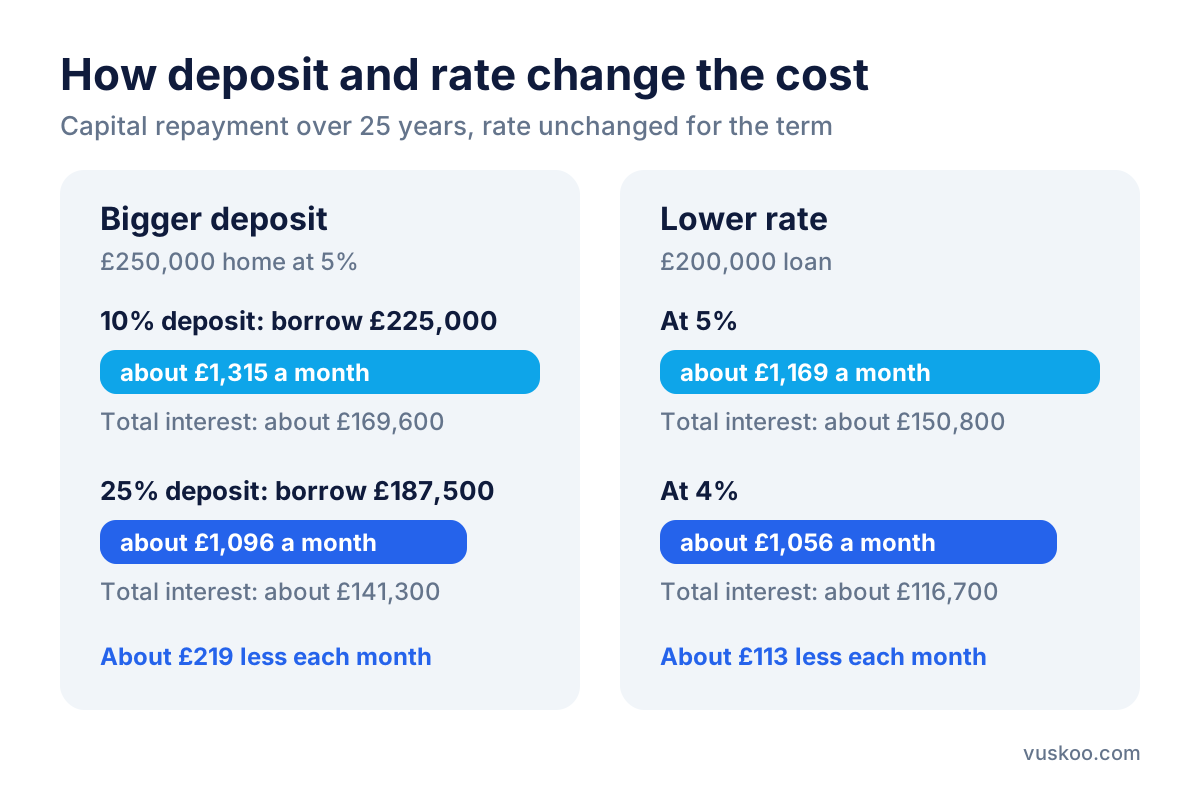
Take a £250,000 home at 5% over 25 years. With a 10% deposit you borrow £225,000 and pay about £1,315 a month. With a 25% deposit you borrow £187,500 and pay about £1,096 a month. That's around £219 a month less and roughly £28,000 less interest over the term. In practice, a bigger deposit can also lower your loan-to-value (LTV) band. Lenders usually price deals by LTV, so the rate itself can come down too. That's why deals are often labelled by LTV, such as the 75% LTV fixed-rate products from Barclays, HSBC and Santander shown alongside this article.
A lower rate
On a £200,000 loan over 25 years, 4% instead of 5% cuts the payment from about £1,169 to about £1,056 a month. That's around £113 less, or roughly £2,700 over a two-year fixed period. If the lower rate lasted the whole term, total interest would fall by about £34,000.
What to compare beyond the headline rate
When you compare deals, the monthly payment is only part of the picture. Look at:
- Product fees: arrangement or booking fees can wipe out the benefit of a lower rate, especially on smaller loans. Check whether the fee is paid upfront or added to the loan, where it would build up interest.
- Length of the fixed period: a two-year fix means remortgaging sooner. A five-year fix gives longer certainty but may come with higher early repayment charges.
- The rate after the deal ends: once the fixed period finishes, you usually move to the lender's standard variable rate unless you switch. What you pay then depends on that rate and on base rate changes at the time.
- Early repayment charges and overpayment limits: these matter if you might move home, remortgage early or overpay.
- Eligibility: some deals are only for first-time buyers or for purchases rather than remortgages.
Personal loans, such as those from Tesco Bank, Zopa, NatWest, first direct or Novuna, aren't a replacement for a mortgage. Using one to top up a deposit can also count against you in a lender's affordability assessment, because the monthly loan repayments reduce what you can afford to borrow.
Frequently asked questions
How much is a mortgage payment on £200,000?
On a capital repayment basis, about £1,056 a month at 4% over 25 years, £1,169 at 5% and £1,289 at 6%. Over 35 years, it's roughly £886, £1,009 and £1,140.
Is a 35-year mortgage a good idea?
It lowers the monthly payment but increases total interest a lot. It can work if you plan to overpay or shorten the term when you remortgage, but compare the total cost before you commit.
Will my payment change during the mortgage?
On a fixed rate, it stays the same until the fixed period ends. On a tracker or variable rate, it can go up or down. When a deal ends, your payment is recalculated based on your new rate and the balance left.
Does my deposit affect my interest rate?
Often, yes. Lenders set rates by loan-to-value bands, so a bigger deposit can move you into a lower band. That reduces both the loan and, in many cases, the rate.
Photo: Schluesseldienst / Pixabay