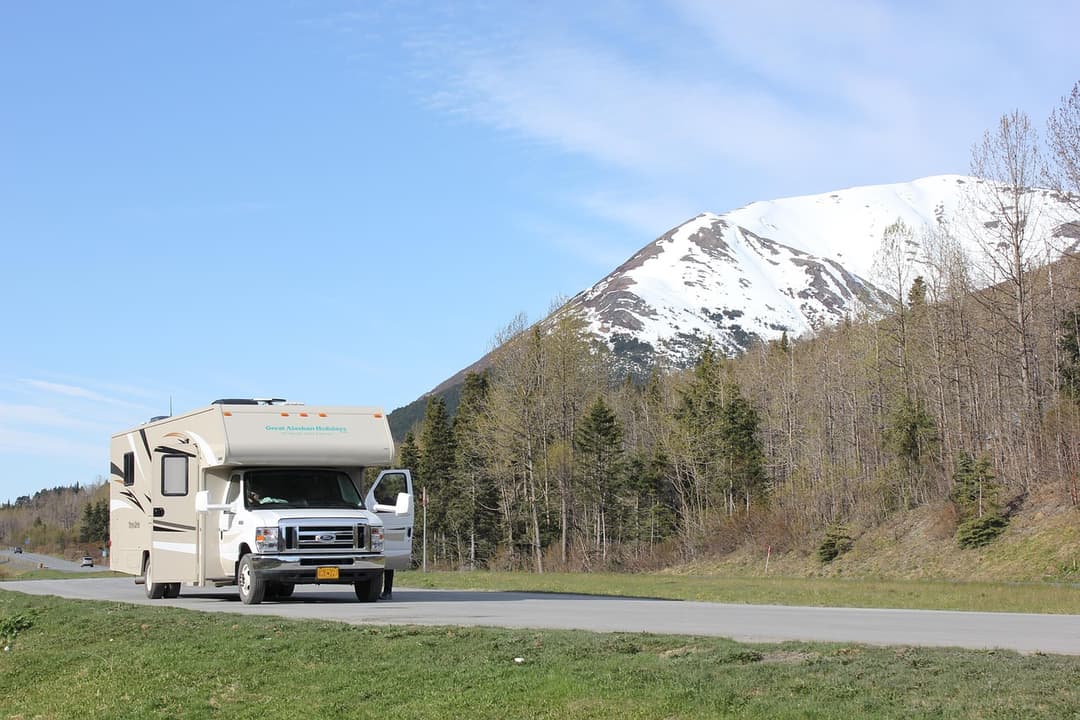
Motorhome breakdown cover is roadside assistance and recovery built for vehicles that are bigger, heavier and harder to tow than a car. Many standard car policies only cover vehicles up to 3.5 tonnes and around 7 metres long, and some exclude vehicles with living accommodation altogether. Before you buy, measure your motorhome or campervan, check its maximum weight on the plate, and compare those figures with each policy's vehicle limits. Then decide which extras you need, such as European cover and onward travel.
Why ordinary car breakdown cover may not cover your motorhome
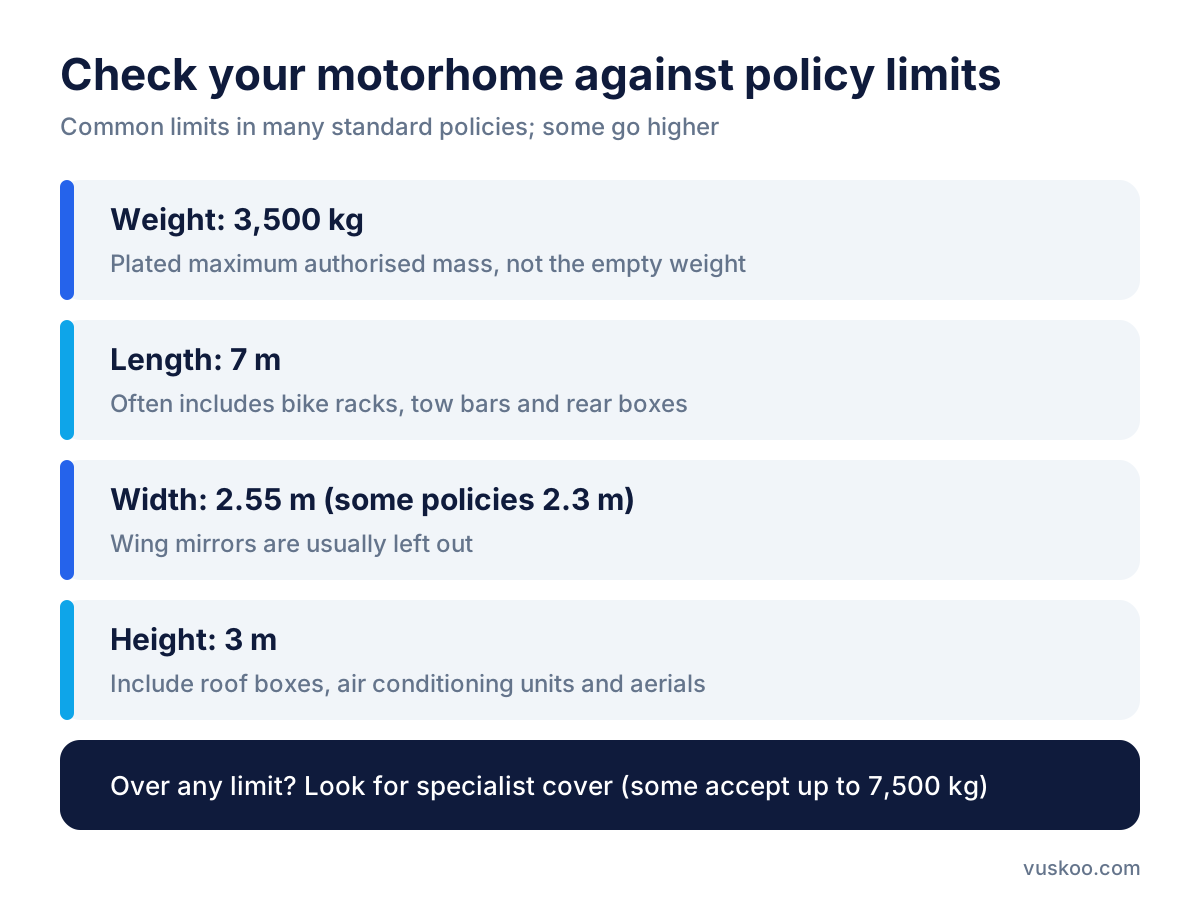
Breakdown providers price and plan their service around the patrol vans and recovery trucks they use. A large motorhome may need a heavier recovery vehicle, which costs more to send, so many policies set eligibility limits. The most common ones are:
- Weight: a cap of 3,500 kg, usually measured as the maximum authorised mass (the fully laden weight on the vehicle's plate), not what the van weighs empty.
- Length: often 7 metres. Some policies set a lower limit for motorised vehicles, and many count bike racks, tow bars and rear-mounted boxes in the length.
- Width and height: 2.55 metres wide and 3 metres high are common limits, but some policies stop at around 2.3 metres wide. That rules out many coachbuilt motorhomes.
- Vehicle type: some car policies only list cars and small vans, or exclude vehicles "used for accommodation".
If your vehicle falls outside any one of these limits, the provider may refuse a call-out, charge you for the recovery or only give limited help. A small van conversion usually fits within car policy limits. A large coachbuilt or A-class motorhome often won't.
How size, weight and age limits differ between providers
There is no industry standard, so two policies that look similar can treat the same motorhome differently. Some specialist and higher-tier policies accept motorhomes up to 7,500 kg and around 8 metres long, while entry-level cover may stop at 3.5 tonnes. Check these points in each policy's terms, not just the summary page:
- How weight is defined. Gross vehicle weight, maximum authorised mass and "laden weight" usually mean the plated maximum. If your van has been re-plated (upgraded or downgraded), use the current plate figure.
- What counts towards length and width. Wing mirrors are usually excluded from width, while racks and tow bars are often included in length.
- Vehicle age limits. Some policies only cover vehicles under a set age for European trips, or ask older vehicles for proof of a recent service or MOT. Classic campervans may need a policy that accepts older vehicles.
- Towing a car or trailer. If you tow a small car or trailer behind the motorhome, check whether the policy recovers both.
A note on driving licences
Weight matters for your licence as well as your cover. If you passed your car test on or after 1 January 1997, your standard licence normally lets you drive vehicles up to 3,500 kg maximum authorised mass. Heavier motorhomes need category C1, which means taking an extra test. Drivers who passed before that date usually kept C1 entitlement for vehicles up to 7,500 kg, though medical checks apply when renewing it from age 70. Check the categories on your photocard before you buy a heavier van.
What motorhome breakdown cover usually includes
Policies are usually sold in levels, and each level adds services. The names vary, but the building blocks are similar:
- Roadside assistance: a patrol tries to fix the fault where you have stopped, usually more than a set distance (often a quarter of a mile) from home.
- National recovery: if it can't be fixed, the vehicle, driver and passengers are taken to a single destination anywhere in the UK. For a motorhome, that often means home, so the holiday can end there.
- Home start: help when the vehicle won't start at or near your home or storage site. Check whether a storage compound counts as "home".
- Onward travel: a hire vehicle, overnight accommodation or public transport while yours is being repaired.
For motorhome owners, check what happens to your belongings, pets and the vehicle itself if it has to be left at a garage, since it may also be your accommodation for the trip.
Which extras are worth paying for?
Which extras are worth it depends on how and where you travel. These are the ones motorhome owners usually weigh up:
European breakdown cover
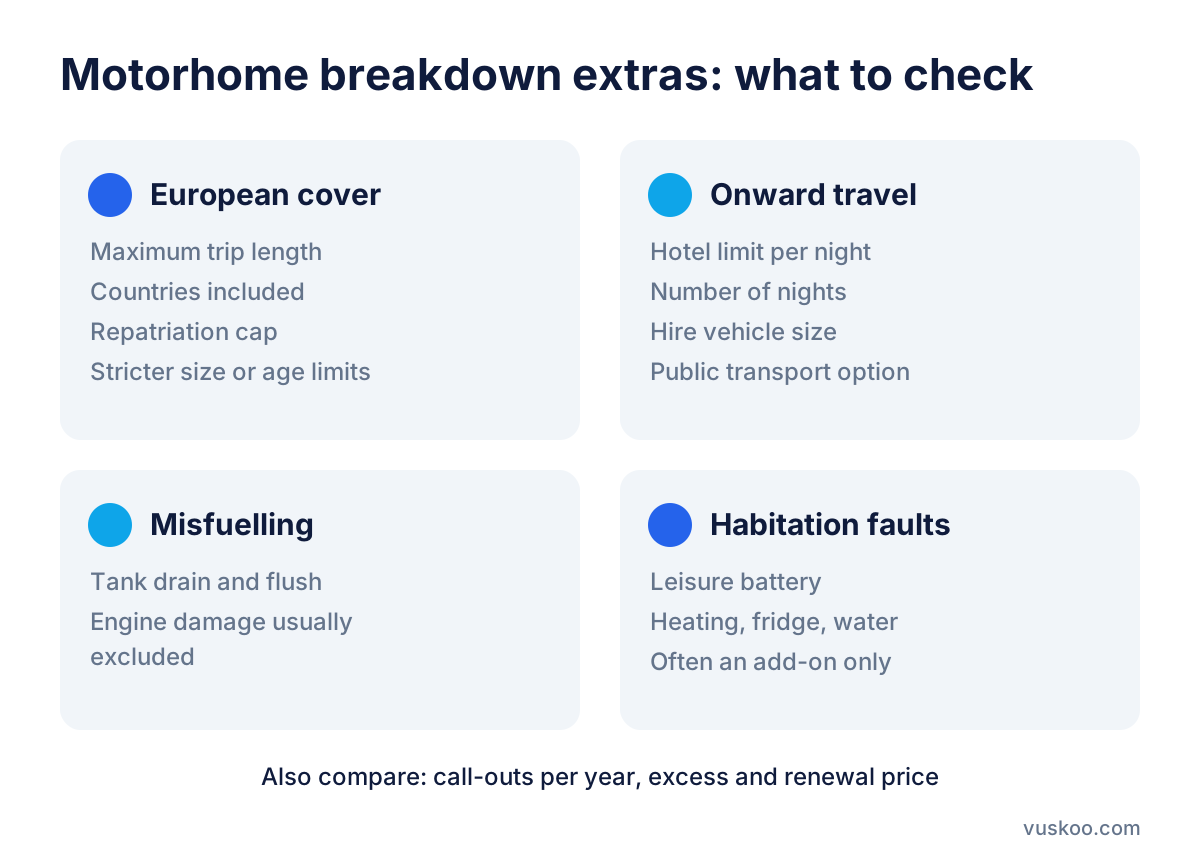
If you take the motorhome abroad, UK-only cover won't help. European policies can be bought per trip or as annual cover. Check the maximum trip length, the countries included, the cap on repatriation costs if the vehicle can't be repaired, and whether the size and weight limits are stricter than the UK policy's.
Onward travel and accommodation
A hire car is less useful when you have lost your accommodation as well as your transport. Look at nightly hotel limits, how many nights are covered and whether a hire vehicle is offered at all for larger groups.
Misfuelling
Putting petrol in a diesel motorhome is an easy mistake in an unfamiliar vehicle or at a foreign pump. Misfuelling cover usually pays for draining and flushing the tank, but often not for any engine damage.
Leisure battery and habitation faults
Most breakdown cover deals with problems that stop the vehicle moving. Faults in the habitation area, such as heaters, fridges, water systems or leisure batteries, are often excluded or only covered as an add-on.
Tyres, keys and parts
Larger motorhome tyres aren't always carried by patrols. Some policies include tyre fitting or key replacement, and some cover parts as well as labour.
How breakdown cover fits alongside campervan insurance
Breakdown cover and motorhome insurance do different jobs. Your motor insurance is the legal requirement: it pays for accidents, theft, fire and damage. Breakdown cover handles mechanical and electrical failures, flat batteries and getting the vehicle moving or recovered. An accident claim and a breakdown call-out are separate, even if both happen on the same trip.
Some motorhome insurance policies include breakdown cover or offer it as an add-on. That can be convenient, but compare it as a separate product: check the same weight, length and age limits, and whether European cover is included. If you already have car insurance with breakdown cover from a provider such as Direct Line, Admiral, Churchill, Hastings Direct, LV=, Saga or M&S Insurance, don't assume it extends to your motorhome. Breakdown cover is often linked to a named vehicle, so ask whether a second vehicle, particularly one with living space, can be added.
If you travel abroad, keep travel insurance in mind too. Travel insurance covers medical costs and cancellation. It doesn't usually cover recovering your vehicle.
How to choose motorhome breakdown cover: step by step
- Write down your vehicle's maximum authorised mass, length including racks, width without mirrors, height and year of registration.
- Rule out any policy whose limits your vehicle doesn't meet.
- Decide whether you need vehicle-based or personal cover (personal cover follows you in any eligible vehicle).
- Choose the level: roadside only, national recovery, home start and onward travel.
- Add European cover if you will travel abroad, and check its own limits.
- Compare the renewal price, call-out limits per year, excess per call-out and any exclusions for faults that existed before you bought the cover.
FAQ
Does car breakdown cover work for a campervan?
Often it does for small van conversions within the policy's weight and size limits. Check that the policy doesn't exclude vehicles with living accommodation.
Is there breakdown cover for motorhomes over 3.5 tonnes?
Yes. Some specialist and higher-tier policies accept heavier motorhomes, in some cases up to 7,500 kg, but you'll need to look beyond basic car cover.
Does breakdown cover include problems with the living area?
Usually not. Habitation faults such as heating, water or leisure batteries are often excluded unless you add a specific option.
Can I get breakdown cover just for a single trip?
Many providers sell single-trip European cover. In the UK, annual cover is more common, so compare it with how often you use the motorhome.
Will my provider recover a motorhome that breaks down at a campsite?
Generally yes, if the site is accessible to a recovery vehicle. Some policies treat a breakdown close to where you're staying differently, so check the home start rules.
Photo: Pexels / Pixabay