
In this article
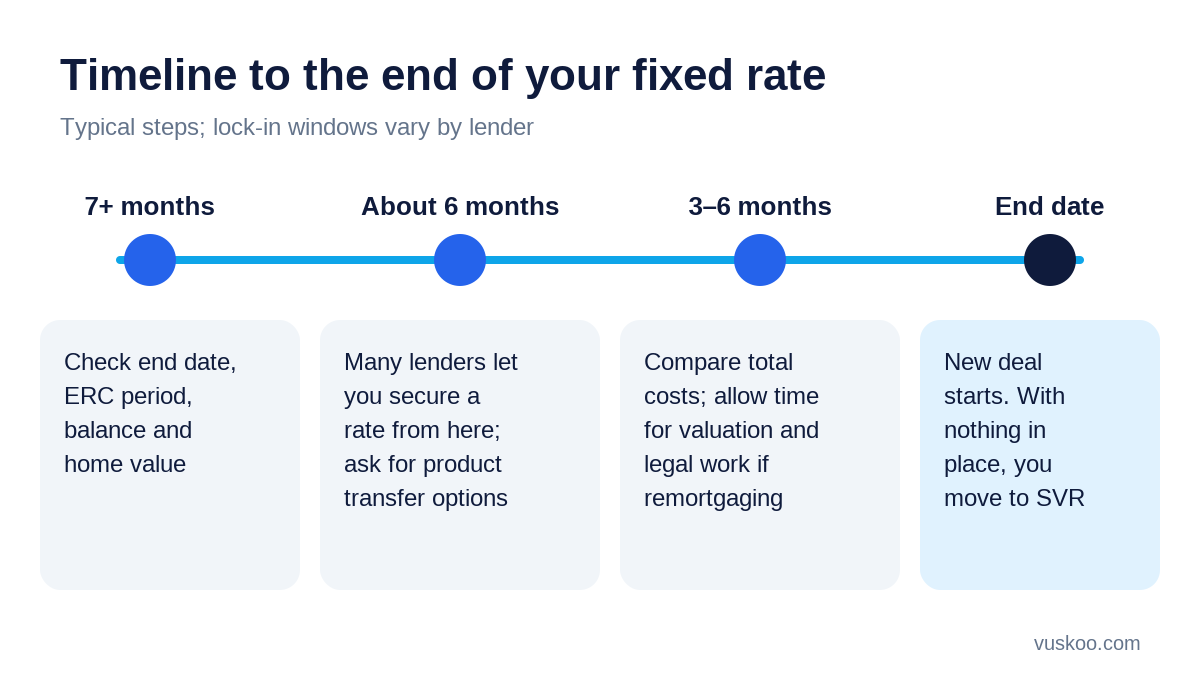
Should you remortgage or take a product transfer when your fixed rate ends in 2027? A product transfer (a new deal with your current lender) is usually quicker, with no valuation, no legal work and, if you aren't borrowing more, normally no full affordability check. Remortgaging to a new lender takes more work, but it opens up the whole market and may get you a lower overall cost. Most lenders let you secure a new rate around six months before your current deal ends, so if your fix ends in 2027, your window to start comparing may already be open or opening soon.
When does your fixed rate actually end?
Start with your mortgage offer or your latest annual statement. You need three pieces of information:
- The exact end date of your fixed rate. This is the date your lender will move you onto its standard variable rate (SVR) if you haven't arranged anything else.
- The end date of any early repayment charge (ERC) period. It usually matches the end of the fix, but not always. If it runs past the fix, leaving early could cost you.
- Your outstanding balance and your home's approximate value. Together these give your loan-to-value (LTV). A lower LTV can put you in a cheaper pricing band.
As a rough guide, if your deal ends in May 2027, a six-month lock-in window opens around November 2026. A deal ending in late 2027 opens its window around spring 2027.
How early can you lock in a new rate?
Many lenders let you apply for a new deal up to about six months before your current one ends, but this isn't a fixed rule. Some only allow three or four months for product transfers, and lenders change their windows from time to time. A remortgage offer from a new lender usually stays valid for a set period, often several months, which is why that route lines up with the same timeline.
Securing a rate early doesn't normally trigger an early repayment charge. The new deal starts when the old one ends, not on the day you apply. The main benefit is protection: if rates go up before your fix ends, you already have an offer. If rates fall, many lenders let you switch to a lower product before completion, and with a remortgage you can usually walk away from an offer you haven't completed on. Check whether any fee you've paid is refundable if you do.
Remortgage or product transfer: how do they compare?
Product transfer with your current lender
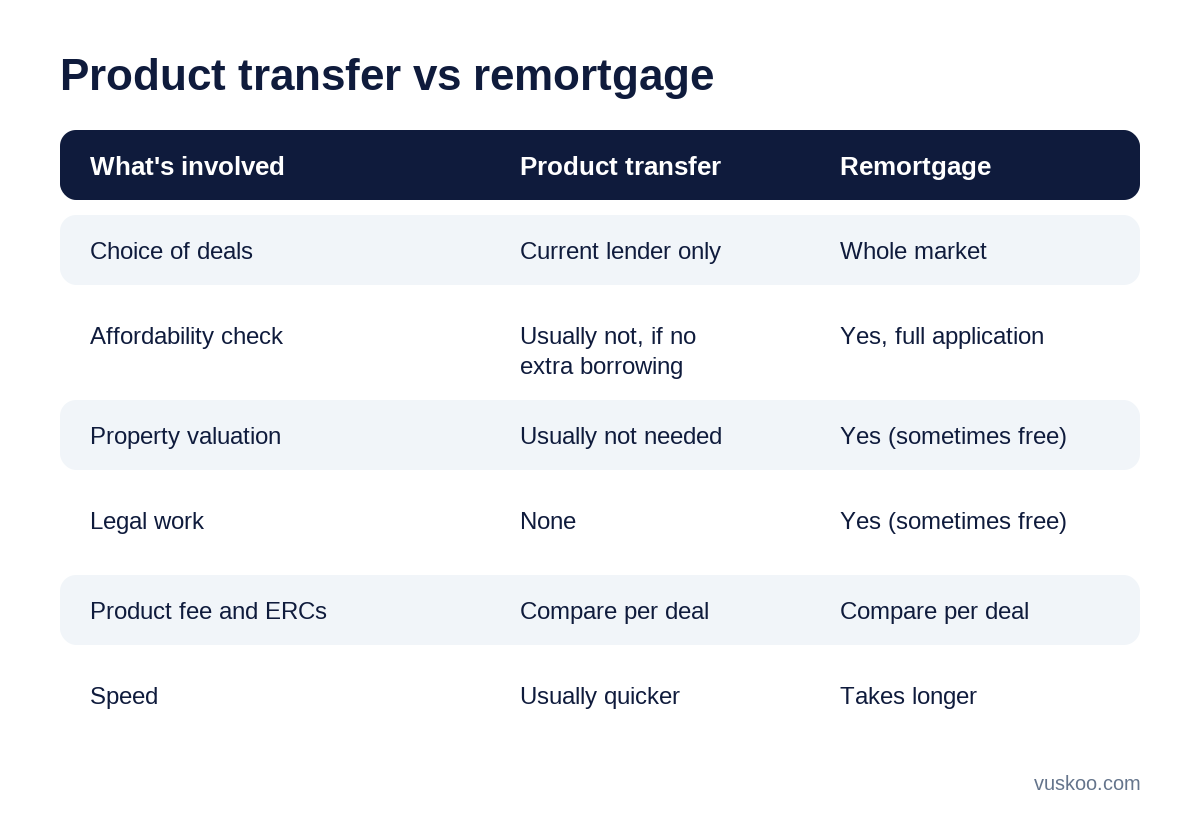
You stay with the same lender and move to one of its new deals. Under FCA rules, a lender can change or replace your existing mortgage without a full affordability assessment if you aren't borrowing more and nothing else changes in a way that matters for affordability. In practice that means:
- usually no new property valuation
- no conveyancing, because the lender and the legal charge stay the same
- less paperwork and a quick switch, often done online
- a good option if your income has dropped, you've become self-employed or your credit file has weakened since you last borrowed
The downside is choice. You only see your current lender's range, which may not be the most competitive for your LTV and circumstances.
Remortgaging to a new lender
You take out a new mortgage elsewhere to pay off the old one. That means a full application:
- an affordability assessment based on your current income and spending
- a credit check
- a property valuation
- conveyancing to transfer the legal charge
Some remortgage products come with a free valuation or free standard legal work, while others charge for them separately. The extra steps take time, which is another reason to start several months ahead. The FCA has recently extended a lighter "modified" affordability assessment to some switches to a new lender where the new mortgage is more affordable than the current one, but lenders apply this differently, so don't count on it.
Which costs should you compare?
Don't just compare headline rates. Compare the total cost over the deal period, including:
- Interest rate and monthly payment for the term and LTV you'll actually have.
- Product or arrangement fee. A lower rate with a large fee can work out more expensive on a smaller balance. If you add the fee to the loan, you'll pay interest on it.
- Valuation and legal costs when remortgaging, unless the product covers them.
- Broker fees, if your broker charges one.
- ERCs on the new deal. Check how much they are and how long they last, especially if you might move house or overpay.
- Overpayment allowance and portability, if you want flexibility during the new deal.
A simple test: add up all the fees, then add the total of your monthly payments over the deal period. Do this for your lender's best product transfer and for a couple of remortgage options at the same term and LTV. The live offer boxes on this page, including fixed-rate products from lenders such as Barclays, HSBC and Santander, are a starting point, but check whether each one is for purchase or remortgage and which LTV band it applies to.
What happens if you do nothing?
When your fix ends, you'll move onto your lender's SVR, or onto a tracker in some cases. SVRs are usually well above the rates on new fixed deals, and the lender can change them at any time, so your monthly payment could jump straight away and keep moving. There are usually no ERCs on an SVR, so you can leave whenever you like, but every month you spend on it can cost you more than a new deal would. Your lender has to tell you before your deal ends. Use that letter as a deadline to have a new deal in place, not as a prompt to start looking.
Remortgage or product transfer: how to choose
- Product transfer may suit you if your circumstances have changed in a way that could make a new lender's affordability check harder, you don't need to borrow more, or your lender's offer is close to the rest of the market once fees are included.
- Remortgaging may suit you if your LTV has dropped a lot, you want to borrow more or change the term significantly, or other lenders are clearly cheaper over the deal period after valuation and legal costs.
- Either way, get your lender's product transfer options in writing first. They give you a fallback while you compare the wider market.
If you're considering borrowing extra for home improvements, compare a mortgage top-up with a separate personal loan. A smaller amount spread over a 25-year mortgage term can cost more in total interest than a shorter personal loan, even at a lower rate.
Frequently asked questions
Does locking in a rate early mean paying an early repayment charge?
Usually not. The new rate starts when your current fix ends, so you aren't repaying early. Check that your ERC period ends on the same date as your fixed rate.
Do I need an affordability check for a product transfer?
Not normally, if you aren't borrowing more and nothing else changes in a way that affects affordability. If you add borrowing, expect a full assessment.
Can I change my mind after securing a deal?
Often yes. Many lenders let you move to a lower product before the switch completes, and you can usually withdraw from a remortgage you haven't completed. Any fees you've already paid may not be refunded.
Will remortgaging affect my credit file?
A remortgage application involves a credit check that shows up on your file. A product transfer often doesn't need a full credit search, though lenders' practices vary.
How long does a remortgage take?
It depends on the valuation, the legal work and how quickly you send documents. That's why many people start comparing about six months before their deal ends.
Photo: stevepb / Pixabay